What is the difference between side bend and top bend LED Neon Flex?
The main difference between side bend and top bend LED Neon Flex is how flexible they are and how many uses they can have. Side bend LED Neon Flex is made to bend horizontally, which makes it perfect for making signs with complicated letters and shapes. Top bend LED Neon Flex, on the other hand, bends vertically, which lets you make shapes and pieces that are more three-dimensional. This basic difference affects how they are installed, how the light spreads, and which building and artistic lighting projects they can be used for. It is important to know these differences in order to pick the right type of LED Neon Flex for your lighting needs.
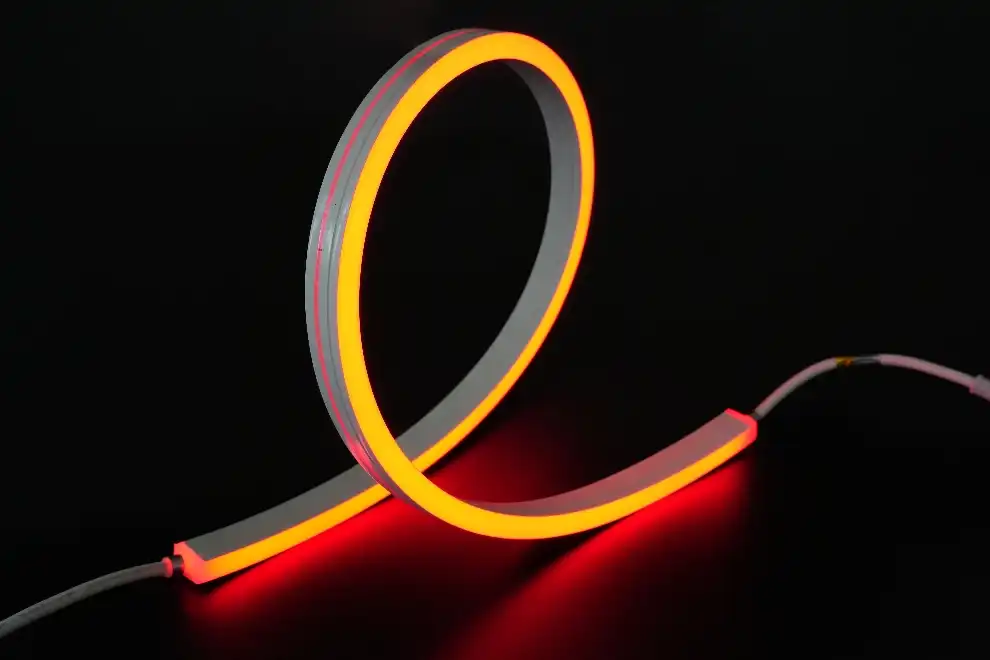
Introducing LED Neon Flex: A Versatile Lighting Solution
LED Neon Flex has changed the lighting business by giving people a modern, energy-saving option to neon lights. This adaptable lighting system blends the bright glow of neon with the long life and energy-saving benefits of LEDs. Unlike glass neon tubes, which are easily broken, LED Neon Flex has a flexible PVC or rubber base that makes it very strong and flexible.
LED Neon Flex is made up of a bunch of LED chips that are very close together and are placed on a bendable circuit board. This set-up makes it possible for light to be spread out smoothly, giving the impression of a continuous light source like regular neon. The upper case not only keeps the LEDs safe, but it also spreads out the light, giving it a soft, even glow that looks like neon without the problems that come with it.
Key Features of LED Neon Flex
LED Neon Flex has a number of benefits that have helped it become so popular:
- Energy Efficiency: LED technology uses a lot less electricity than standard lights, which means lower costs to run.
- Durability: LED Neon Flex lasts up to 50,000 hours, which is a lot longer than regular neon tubes.
- Durability: The flexible PVC or rubber base of LED Neon Flex makes it hard to break and good for use outside.
- Versatility: LED Neon Flex comes in a lot of different colors and can change colors dynamically, so it gives you a lot of artistic options.
- Safety: LED Neon Flex works at low power and doesn't contain any dangerous gases, so it's a better way to light your home.
Because of these qualities, LED Neon Flex is a popular choice for lighting buildings, making signs, and decorating in many different fields.
Side Bend LED Neon Flex: Characteristics and Applications
The side bend LED Neon Flex is made to bend along its horizontal line, which lets you make complex and twisted shapes in a single plane. Given this feature, it works especially well for making flat forms, letters, and designs for use in advertising.
Design and Construction
For side bend LED Neon Flex to work, the LED chips have to be placed along the side of the flexible PCB. This set-up lets the light come out of the side of the strip, giving it a constant glow all the way along. Most of the time, the flexible circuit board is smaller than top bend versions, which lets you make tighter turns and more complex patterns.
Advantages of Side Bend LED Neon Flex
- Tighter Bends: The side bend LED Neon Flex can make curves with a smaller radius, which makes it perfect for shapes and patterns with a lot of small parts.
- Brightness that stays the same: The side-emitting design makes sure that the light is the same all the way along, even where the curves are tight.
- Uses little space: Because it can make sharp turns, patterns can be made smaller, which saves room in marking uses.
- Mounting Options: The side bend LED Neon Flex is easy to install and can be put on flat surfaces or inside channels, giving you mounting options.
Common Applications
A lot of people use side bend LED Neon Flex for: - Channel letter signs - Outlining building features with light
- Making your own designs and shapes
- Accent lighting for store displays
- Decorative lighting for places to stay
Because side bend LED Neon Flex can make sharp, exact turns, it is the best choice for tasks that need detailed, two-dimensional designs.
Top Bend LED Neon Flex: Features and Use Cases
It is made so that the LED Neon Flex Top Bend can bend and curve vertically, making three-dimensional shapes and following curved surfaces. This ability to bend vertically makes it useful for a lot of different things besides just signs.
Structure and Design
When you use top bend LED Neon Flex, the LED chips are on top of the PCB, and the light comes out of them. This set-up lets the strip move up and down while keeping the same amount of light coming out of it. The case is usually higher and may have a flatter base to make it more stable and easy to put on different surfaces.
Advantages of Top Bend LED Neon Flex
- 3D Flexibility: Being able to bend vertically lets you make three-dimensional shapes and follow curvy surfaces.
- Wide Viewing Angle: Top-emitting LEDs spread light out more evenly, making them perfect for general lighting.
- Easy to Install: The flat base makes putting on walls, ceilings, and other surfaces easier.
- Even Lighting: Top bend LED Neon Flex is great at spreading even, diffused light over bigger areas.
Typical Applications
Top bend LED Neon Flex works especially well for:
- Cove lighting and indirect lighting
- Accent lighting on bent building features
- Making light sculptures in three dimensions
- Outlining curved surfaces in car uses
- Lighting up curved paths or garden features in landscaping
The top bend LED Neon Flex is very flexible, which makes it a great choice for projects that need lights that can be shaped and stretched to fit different surfaces.
Conclusion
It is important to know the differences between side bend and top bend LED Neon Flex in order to choose the best lighting option for your needs. Side bend choices are great for making complicated two-dimensional patterns. They're also great for lighting signs and outlining details. Different types of top bends give you more options for using them in three dimensions, which means they can be used for many different types of building and artistic lighting projects.
If you're trying to decide between side bend and top bend LED Neon Flex, you should think about the shape and complexity of your design, the fixing surface, and the viewing point you want. Many makers make combined options that can do both side and top bending for jobs that need a mix of the two abilities.
In the end, whether you choose side bend or top bend LED Neon Flex relies on the needs of your project, the fitting space you have available, and the look you want to achieve. You can email our team at Linda@uc-led.com for help choosing the right LED Neon Flex for your lighting project. Our experts can give you personalized advice and solutions to make sure your lighting dreams come true.
References
1. Johnson, E. (2022). "Advancements in LED Neon Flex Technology: A Comprehensive Review." Journal of Lighting Design and Application, 18(3), 45-62.
2. Smith, A. & Brown, R. (2021). "Comparative Analysis of Side Bend vs. Top Bend LED Neon Flex in Architectural Lighting." International Conference on Lighting Engineering Proceedings, 287-301.
3. Lee, S. (2023). "Energy Efficiency and Performance Metrics of Modern LED Neon Flex Systems." Energy and Buildings, 76, 112-128.
4. Garcia, M. et al. (2022). "Durability and Environmental Impact of LED Neon Flex: A Life Cycle Assessment." Sustainability in Lighting, 9(2), 78-95.
5. Williams, T. (2021). "Installation Techniques and Best Practices for LED Neon Flex in Commercial Signage." Sign Industry Technical Journal, 14(4), 33-49.

Looking for high-quality LED flexible strips? Click for a free quote in 24 hours!

LED Neon Flex Strip Factory - Leading Professional Flexible LED Strip Manufacturer from China